A New Hidden Horror Gem Is The Perfect Halloween Watch
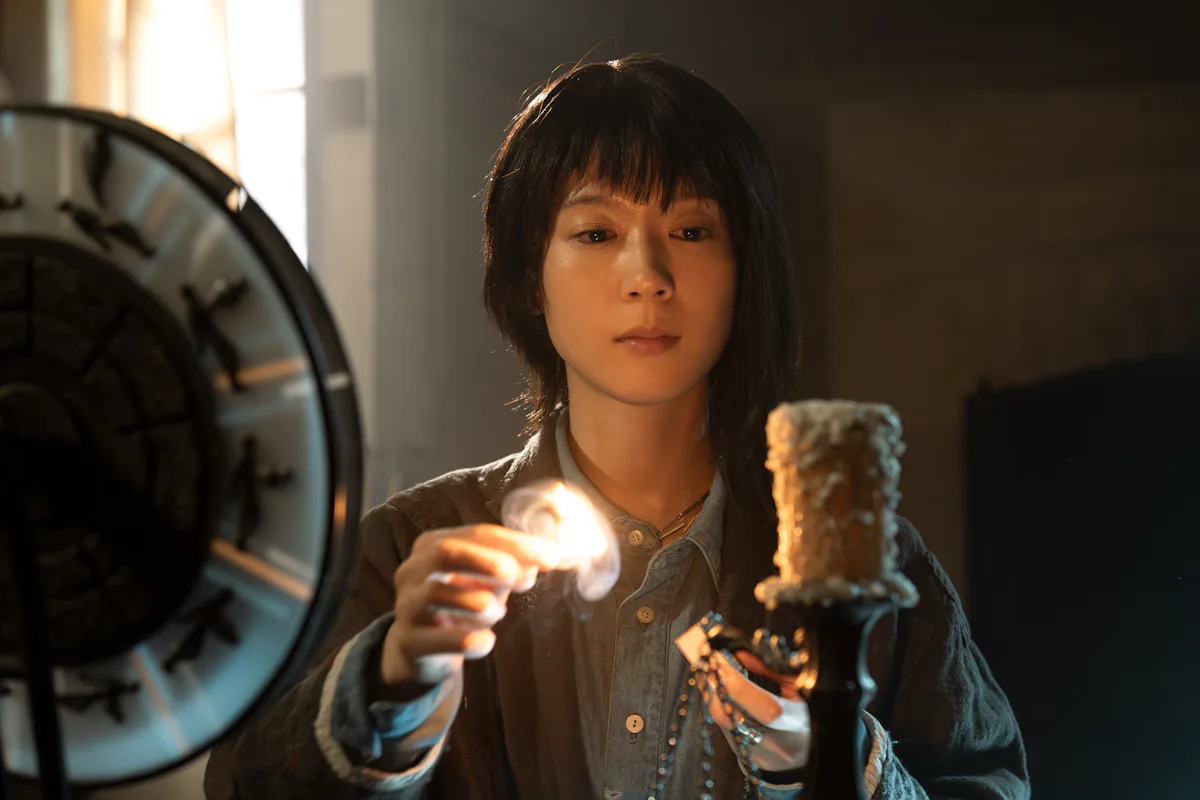
Japanese horror has brought the genre some of its creepiest (and most widely copied) images: Sadako (a.k.a. Samara) climbing out of the well in The Ring, for example, or the chilly cyber-paranoia of Kiyoshi Kurosawa’s Pulse. Even Other Mommy draws inspiration from J-horror, stretching Jessica Chastain’s throat in the style of the Rokurokubi, a woman with a long, prehensile neck from Japanese folklore. Directed by an American in Japan with a Japanese cast and crew, the chilling new ghost story Never After Dark is a stellar example of the terrifying possibilities of this kind of cultural exchange.
The opening scene sees Airi (Moeka Hoshi, of FX’s Shogun) arguing with her sister Miku (Kurumi Inagaki), who we see reflected in the rearview mirror of her car as Airi drives to the isolated mountain home that she’s been hired to clean. Not with rags and mops, mind you: We soon learn that Airi is a spiritualist-for-hire who travels around Japan exorcising businesses and private residences of their unwanted ghostly guests. The backstory gets even thicker when we realize that homeowner Teiko (Tae Kimura) and her skeptical son Gunji (Kento Kaku) can’t see Miku — as it turns out, Miku died years ago, and is the one spirit Airi can’t bring herself to banish.
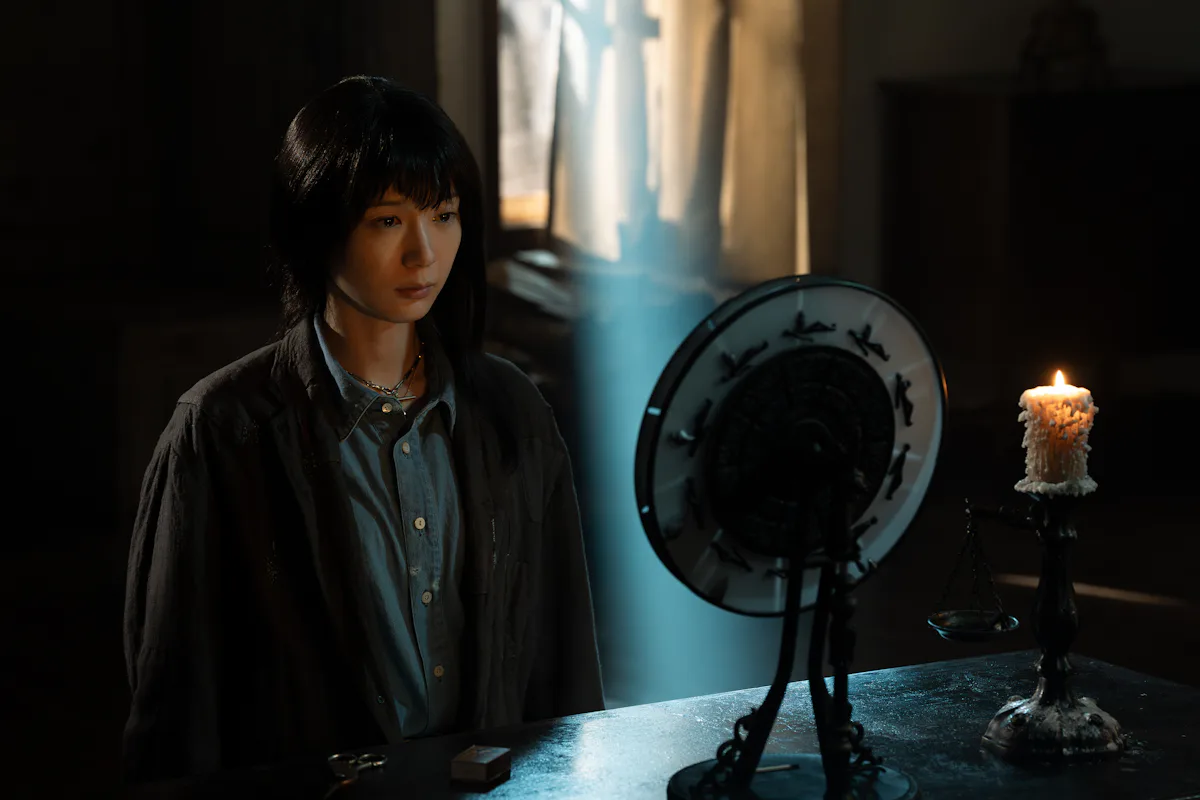
Airi’s methods have been handed down through many generations, and come with a complex series of rules and procedures. The most important of these is a ritual involving a candle, a pair of scissors, and Airi’s own hair; these pair with a device akin to a zoeotrope whose spinning wheel puts Airi into the hypnotic headspace she needs to access in order to reach the other side. The ghost that’s haunting Teiko’s house is especially aggressive and malignant, however, and Airi’s usual methods may not be enough to persuade him to move on.
The haunting scenes in Never After Dark pull from an intriguing mix of Asian and Western influences, combining folkloric imagery with an original set of practices and beliefs created for the movie by writer-director Dave Boyle. As with most ghost stories, the key to Airi’s success is finding out what’s keeping the spirit bound to this world. And as the mystery deepen, her investigations into the house’s past are combined with haunting scenes that cleverly utilize the long hallways and sliding doors of traditional Japanese architecture to heart-stopping effect.
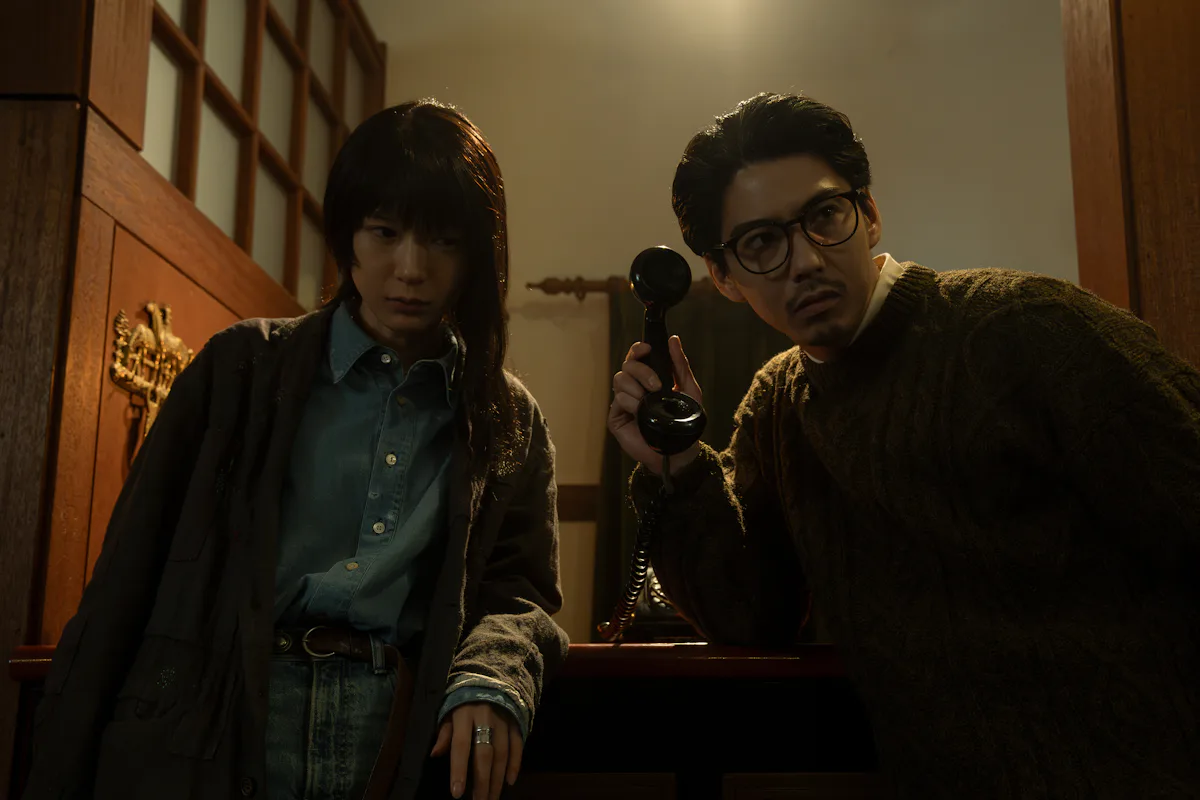
Gunji can’t get over the fact that his mother truly believes in ghosts, however, and keeps finding excuses to come by the house in order to — although he’d never admit it — keep an eye on Airi, who he’s convinced is a fraud. This leads to more supernatural happenings and terrifying encounters, culminating in a twist that makes us rethink everything we’ve seen up to this point. But the machinations of its intricate plot are half the fun of Never After Dark, so it’s probably best to just leave the description there.
Suffice it to say that the amount of thought Boyle puts into creating Airi and her world — there’s enough material here for a whole series of movies — is exceptional, particularly when paired with the solidly crafted, genuinely scary haunted-house horror sequences. With its chilly breezes and rustling leaves, Halloween is a particularly good time for telling ghost stories. And celebrating a holiday that began in Ireland with a Japanese-American co-production is very much in the spirit of this cross-cultural horror gem.