Street Fighter’s Most Forgotten Spin-Off Concluded 26 Years Ago, But Remains Influential Today

With Street Fighter‘s live action movie having recently released, it’s tempting to look back at the series’ history, which spans decades back to the arcade craze Street Fighter 2 started back in the early 90’s. However, players forget how often Street Fighter branched out from its traditional structure to re-invent itself, trying to capture new audiences with bold new directions from time to time. One such experiment resulted in a completely new trilogy of Street Fighter games, which would later inspire the franchise’s modern revival in some ways.
The mainline Street Fighter series has seen many titles fans have been torn on, including the Street Fighter 3 trilogy when it released in arcades. The fighting game IP has gone through a number of evolutions, from the anime-inspired Street Fighter Alpha prequels to the more modern Street Fighter 6 and its RPG-like World Tour mode for making your own character avatar. Yet, one of the biggest shifts came when the series moved from traditional 2D sprite animation to 3D work similar to Tekken or Virtua Fighter, creating an experimental Street Fighter titles that would inspire later franchise entries.
Street Fighter EX3 Released In 2000 As The Final Entry In A Rare 3D Game For The Series
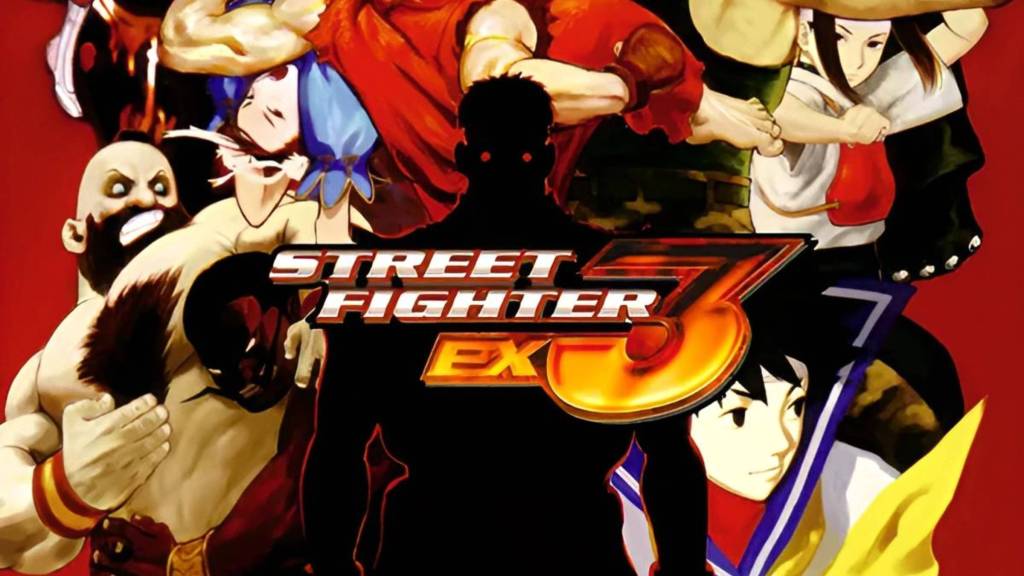
The Street Fighter EX series was a spin-off from the mainline Street Fighter games, created by Capcom and the developer known as Akira. Former Capcom employees that make up a majority of Akira were the ones who created the EX games, which took classic Street Fighter characters and put them into 3D environments. Instead of pixel art and sprites, fighters like Ryu and Guile were given complex polygons and weighted movements similar to Tekken, although without omnidirectional battlegrounds or movement. Characters still operated on a 2D plane for fighting, creating an odd mixture of fighting game systems that hadn’t been seen before.
The first Street Fighter EX game was released in 1996, becoming popular enough to inspire two sequels. Street Fighter EX3 came out in 2000, attempting to chase the trend of Virtua Fighter and Tekken, which were taking fighting game fans away from traditional titles in the genre. During a time where Street Fighter was struggling somewhat, this experiment was fairly successful, only getting more prevalent when home consoles started hosting the EX series too. Overall, the EX series had mixed reviews, but it had some innovative ideas that put Street Fighter characters into fresh gameplay frameworks compared to what the series usually did.
There were tag systems in Street Fighter EX3 that made the game feel more experimental than other Street Fighter titles, almost taking aspects from Marvel vs Capcom in the process. Players could call upon and control multiple characters at once in wild crossover interactions that were not balanced, but very fun to see take place. At the same time, Street Fighter EX3 had chaotic modes where 1v1 or 1v3 matches could take place, with character creation modes allowing players to build their own Street Fighter long before Street Fighter 6. Several original Akira characters like Skullomania were also incredibly unique, making the game’s roster feel diverse.
Free-flowing combo structure and floaty character movements were uncanny at best, but far less restrictive than some Street Fighter games had done before. Typically, Street Fighter is a series with hard rules about its gameplay, rarely allowing players to do actions outside a game’s core parameters. Street Fighter EX3 was the complete opposite, giving players tons of options in gameplay that were more open-ended. The charm of the EX series was how distinct it was, rather than just a rehash of what Street Fighter was already doing.
Systems & Mechanics From The EX Series Would Later Help Define Street Fighter 4 & 6 For The Franchise’s Revival

The 3D designs of Street Fighter characters were perhaps the longest lasting legacy of the EX games, as they would later inspire the looks for iconic fighters in games like Street Fighter 4. SF4 completely re-invented the franchise, adopting 3D visuals and backgrounds while keeping gameplay within a traditional 2D plane. This was the approach that made games like Street Fighter EX3 so interesting, so it only makes sense that its most innovative feature would carry over. With Street Fighter 4 representing the revival of the IP in many players’ eyes, the EX series is therefore one to thank.
The character customization of Street Fighter EX3 were also referenced in Street Fighter 6, where players could build an in-game avatar in World Tour mode. Throughout World Tour, you unlock various fighting styles and special moves that reflect the game’s characters, being able to mix and match them however you please. Street Fighter EX3 allowed you to do the same thing, making custom fighters broken and unbalanced, but incredibly unique compared to the strict characters used in other modes. The evergreen popularity of Street Fighter 6‘s Avatar battles is a testament to how much the EX3 feature was on the right track, even over 20 years later.
Although it isn’t remembered as well as Street Fighter 2 or Street Fighter 3: Third Strike, any of the EX games helped developer Arika continue their style of fighting game into the modern day. 2018’s Fighting EX Layer continues the EX series spiritually, even if it doesn’t have Street Fighter characters in the mix (unless you count Terry Bogard, who is in it and SF6). As Street Fighter continues to grow and change, it’s fascinating to see how more obscure games like Street Fighter EX3 influenced it, even if it wasn’t played as much as other titles in the series.
What do you think about the Street Fighter EX games? Let us know in the comments below!