Sandy Christ makes fuzzy, out-of-focus illustrations that make you embrace ambiguity
“Growing up German-Nigerian, I’ve always felt like I existed in a liminal space, somewhere in between,” says London-based illustrator and designer Sandy Christ. “There’s a pressure – less so in a city like this, that’s why I’m here – to neatly fit into a pre-shaped box so others can comprehend you. I think that’s why I’ve become interested in ambiguity and the capacity to sit with something that doesn’t resolve, something that stays astride.”
Whether it’s across album covers, editorials or event visuals, Sandy’s illustrative style often resists a search for clarity by shifting her subjects slightly out of focus. From soft Riso-looking food illustrations to ethereal artworks that make records look more like portals to far away worlds, the illustrator’s fuzzy, tactile and layered mark-making reveals a fascination for the “things that initially feel beyond comprehension” to us. In a visual world of her own she explores subjects like: “multi-heritage identity, music, surrealism, consciousness, the metaphysical, space, quantum physics, and my own emotions and psyche,” she says. It’s on the borders of these more unknown, blurry subjects that a certain kind of abstraction and dream-like style has been able to come to life for Sandy.
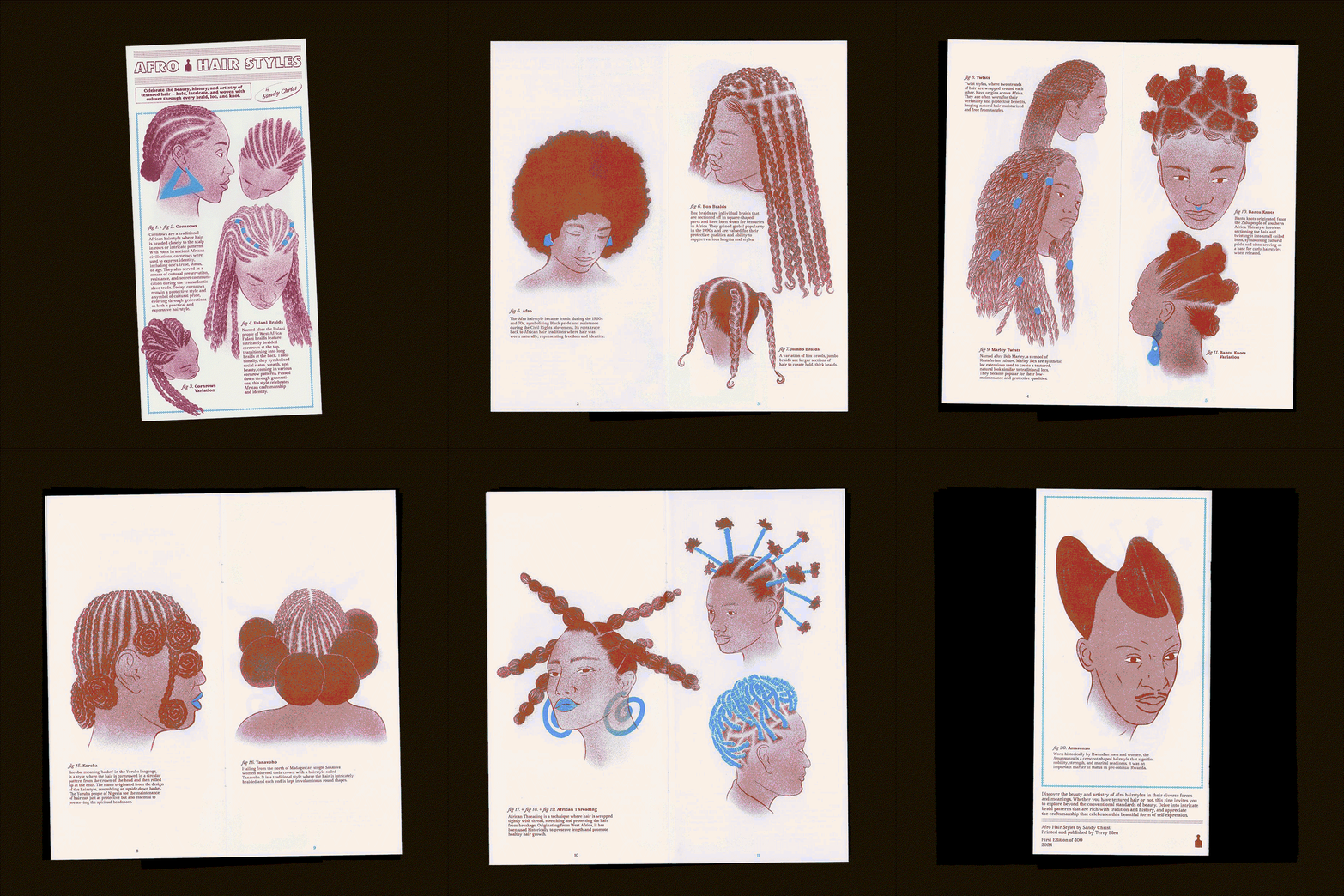
Sandy has found a space to explore facets of her multi-heritage identity in particular through self-published projects and zines. For her poems and illustrations for Chutney Magazine, the creative unpacked her experience of growing up between German and Nigerian culture: “My mum would cook both cuisines and sometimes combine leftovers in her plate,” she says, hence the title of the series, Everything goes into one stomach. A collaboration with Gurlz with Curlz for German Black History month led the designer to celebrate Black beauty in an illustrated zine printed by Terry Bleu on Afro Hair Styles inspired by paste-ups on salon windows, “for which we chose cornflower blue and burgundy to echo the sun-faded colours of these posters”. The publication became “a form of representation I didn’t have growing up”, she ends.