Green toy soldiers become powerful symbol for IWM exhibition
Johnson Banks has repurposed the familiar plastic icon for Childhood in War, now running at London’s Imperial War Museum
Design agency Johnson Banks has created a striking visual identity for Childhood in War, a major new exhibition at the Imperial War Museum (IWM) in London that explores the impact of conflict on children stretching all the way from the First World War to the present day.
Running until February 28 next year, the free exhibition is the first in the UK dedicated to examining how war shapes young lives. It combines immersive environments with personal testimonies, historical artefacts and interactive displays, inviting visitors to experience conflict from a child’s perspective, from evacuation and survival to disruptions in education and family life.
The exhibition arrives at a time when, according to figures jointly published by Unicef and the UN, more than 450 million children – over one in six globally – are living in areas affected by conflict. That staggering number might be difficult to comprehend, but IWM hopes to make it more tangible here through first-hand contemporary stories sourced from Afghanistan, Ukraine, Sudan and elsewhere.
For the campaign visuals, Johnson Banks turned to one of the most recognisable icons associated with childhood: the green toy soldier. As well as depicting soldiers themselves, the studio reformed the instantly recognisable plastic aesthetic into playing children, resulting in imagery that is by turns nostalgic and slightly unsettling.
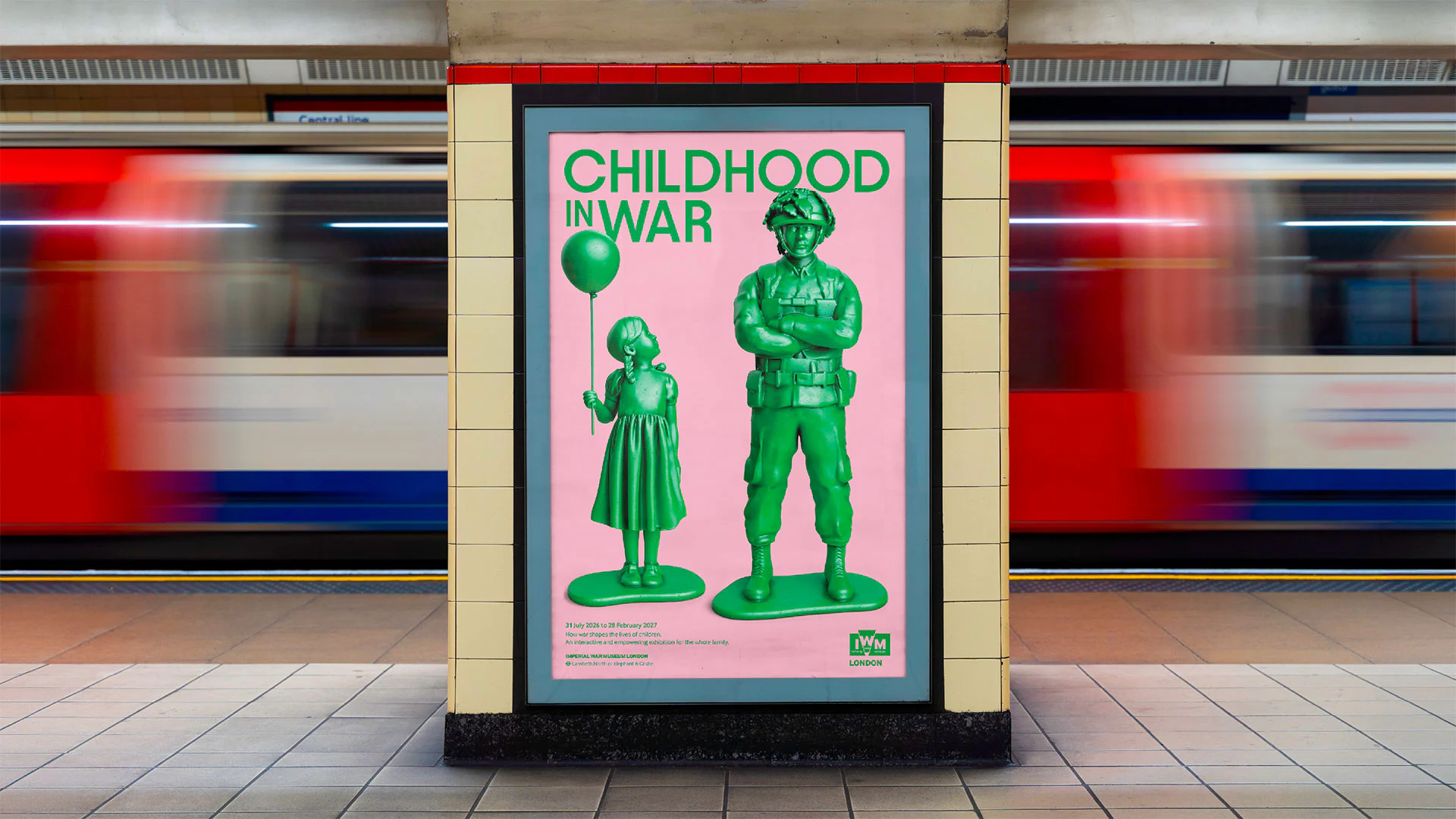
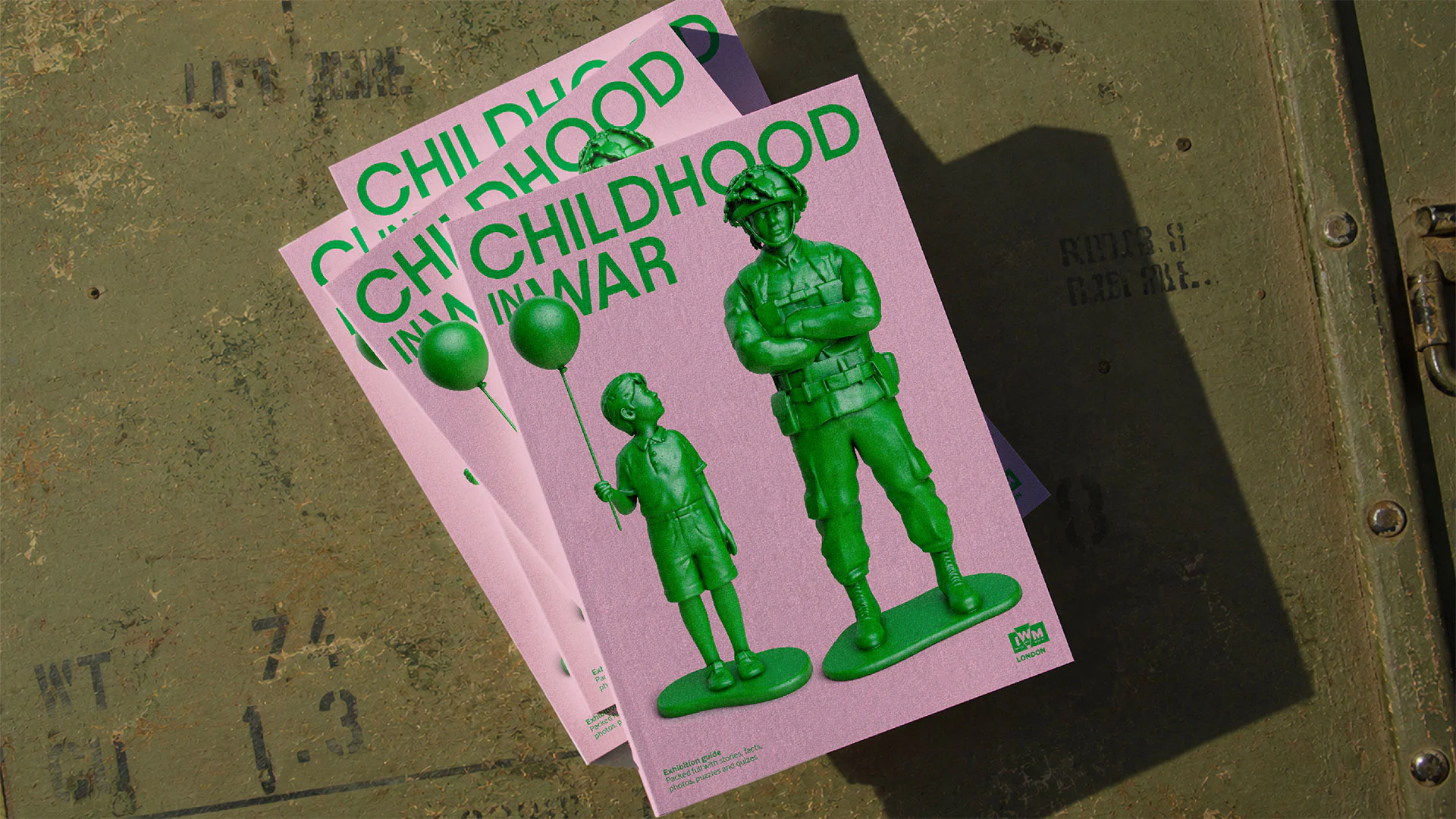
“Our task was to create the posters and lead the communications to bring visitors to the exhibition. We drew on green plastic soldiers for our inspiration, then created a new cast of characters that are both familiar and a bit jarring, all at the same time,” says Michael Johnson, founder and creative director at Johnson Banks.
“By playing with the vernacular of childhood and recreating children themselves in the same style, we’re intentionally making passers-by look and think about some of the issues the exhibition raises.”
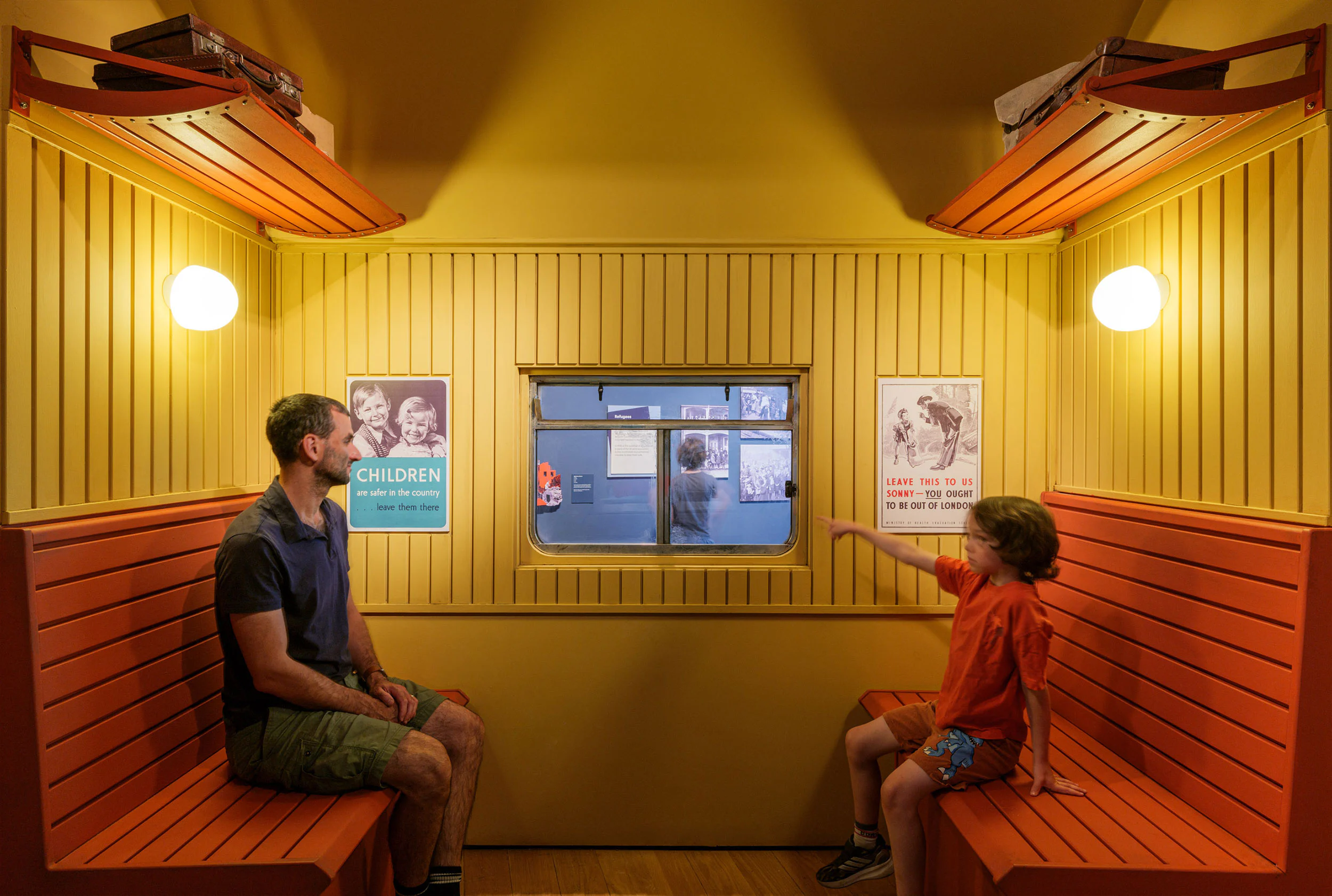
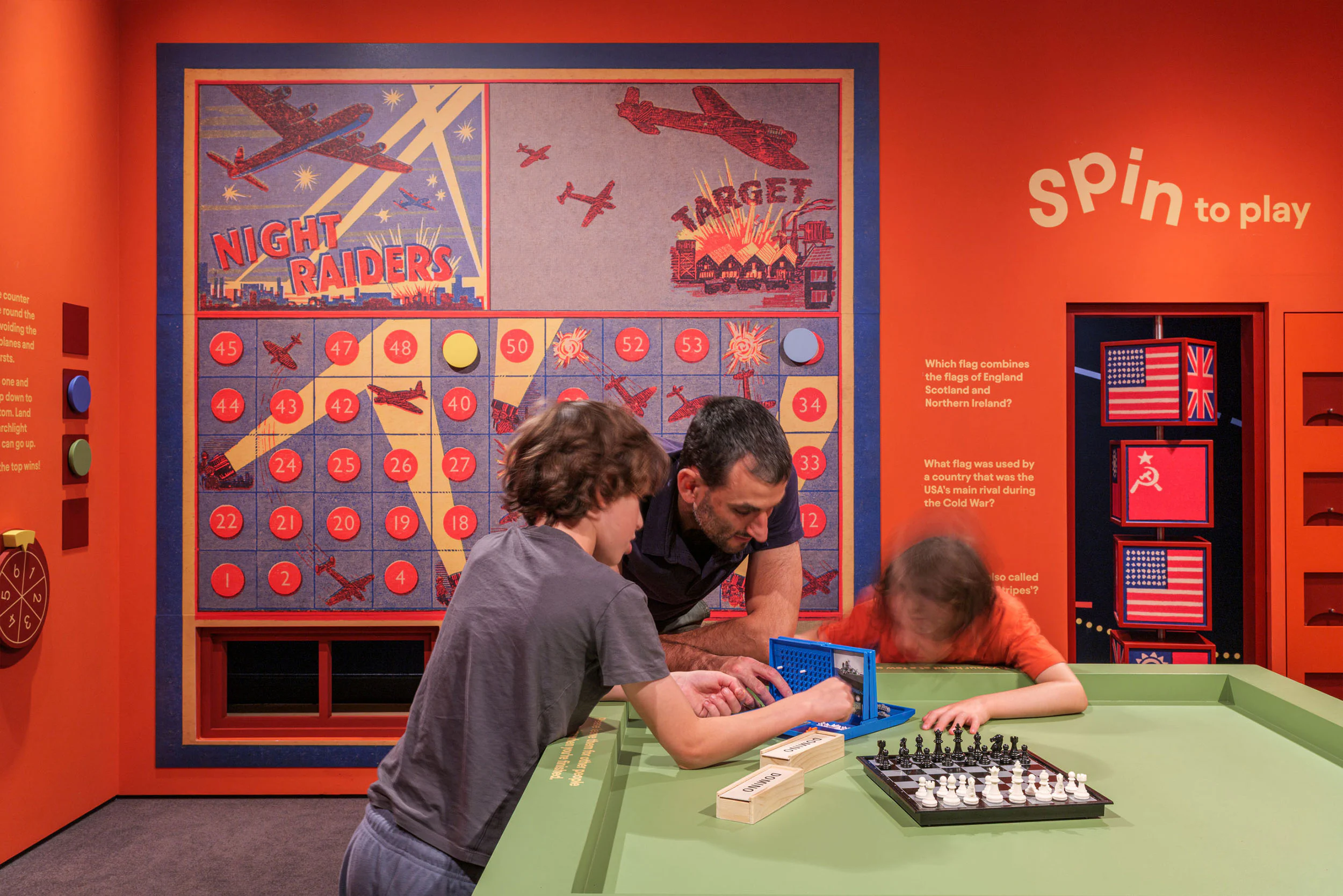
Inside, visitors can board a full-scale recreation of a World War Two evacuee train carriage, explore a Cold War-era living room and kitchen, and step into period-specific bedrooms and classrooms that reveal how children’s everyday lives have been shaped by conflict. Historic personal objects, such as toys and clothing carried on the Kindertransport, sit alongside wartime-set children’s books by authors including Jacqueline Wilson and Deborah Ellis.
The design of the exhibition itself was created by Nissen Richards Studio, with Johnson Banks responsible for the visual identity, posters and animation, while the campaign’s 3D design was produced by Double Up Studio.