The Easy Money Fairy Tale Is About To End...Violently
Submitted by QTR's Fringe Finance
For the better part of the last couple years, I have wondered whether financial markets are permanently broken. Not simply overvalued or temporarily irrational, but actually broken at the mechanical level and permanently distorted. I’ve written about it.
The basic process that is supposed to make capitalism work goes like this. Capital flows toward good ole’ fashioned productive uses (like the George Foreman Grill™) and away from flashy hot-shit stupid ones (like the Apple Vision Pro). Good businesses eventually outperform bad ones. Fraud eventually gets exposed. Making money is the point of a business. Price is a rationing mechanism and is determined by free markets. This system appears to have been dead for the last 10 years, at least.

Nowadays, we function under a derivative of capitalism (hereinafter referred to as “crony capitalism snorting bath salts, operating under policies so disorganized they’d make a Jackson Pollock painting look like the blueprints for a nuclear reactor”) where trillions of dollars can be created overnight, governments and central banks focus obsessively on a handful of key numbers, and preserving the nominal value of stocks and other financial assets has become the priority.
Everything else in the economy is then forced to adjust accordingly, and if you don’t like it, or it causes the price of your Whopper Jr.™ to go to $57, f*ck you…that’s just how money works nowadays.
We’ve spent most of the last 20 years systematically removing consequences from the financial system. Rates went to zero and stayed there for years. The Fed expanded its balance sheet by trillions. Every major crisis was met with an intervention, liquidity facility, bailout or assurance that policymakers stood ready to keep the machine running. Capital was forced to become extraordinarily cheap, and investors eventually became conditioned to believe it would remain that way. We laughed off our country’s credit downgrades. Economists and analysts turned into total pussies and cowards, crumbling into bits every time the market sold off 5%. Financial projections have turned into Hunter Thompson-esque 3AM drug induced astral projections.
And we turned into the real life version of Idiocracy for markets.
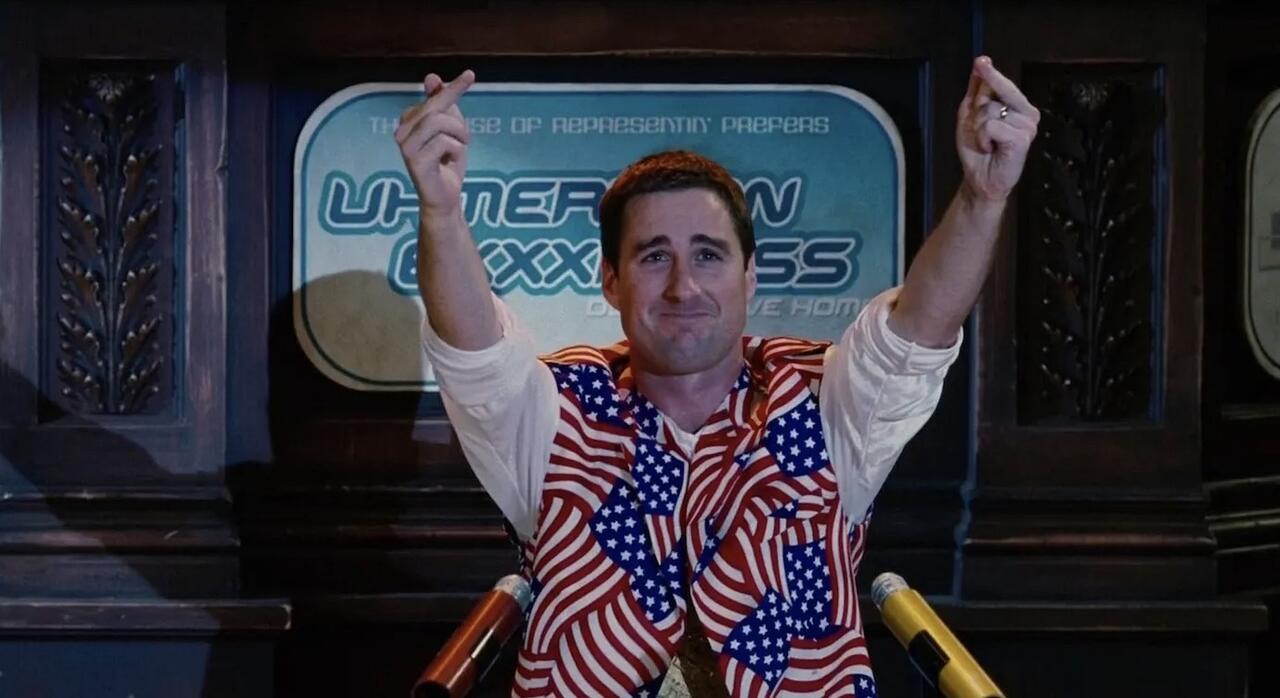
When money costs almost nothing, the hurdle rate for stupidity also approaches nothing. Businesses that never should have existed could raise billions of dollars. Venture capitalists could fund companies whose principal innovation was taking an existing business, attaching an app to it and losing money faster. Private equity could lever mediocre companies into supposedly brilliant investments. Private credit could convince investors that illiquid loans were somehow less volatile because nobody bothered marking them every afternoon.
SPACs could raise billions before investors even knew what they were buying. Crypto tokens created out of thin air could acquire enormous valuations. Meme stocks became religions. Companies substituted adjusted EBITDA for profits, stock based compensation for salaries and “community” for customers. Entire industries emerged whose economic purpose sometimes appeared to consist primarily of raising money from the previous industry.
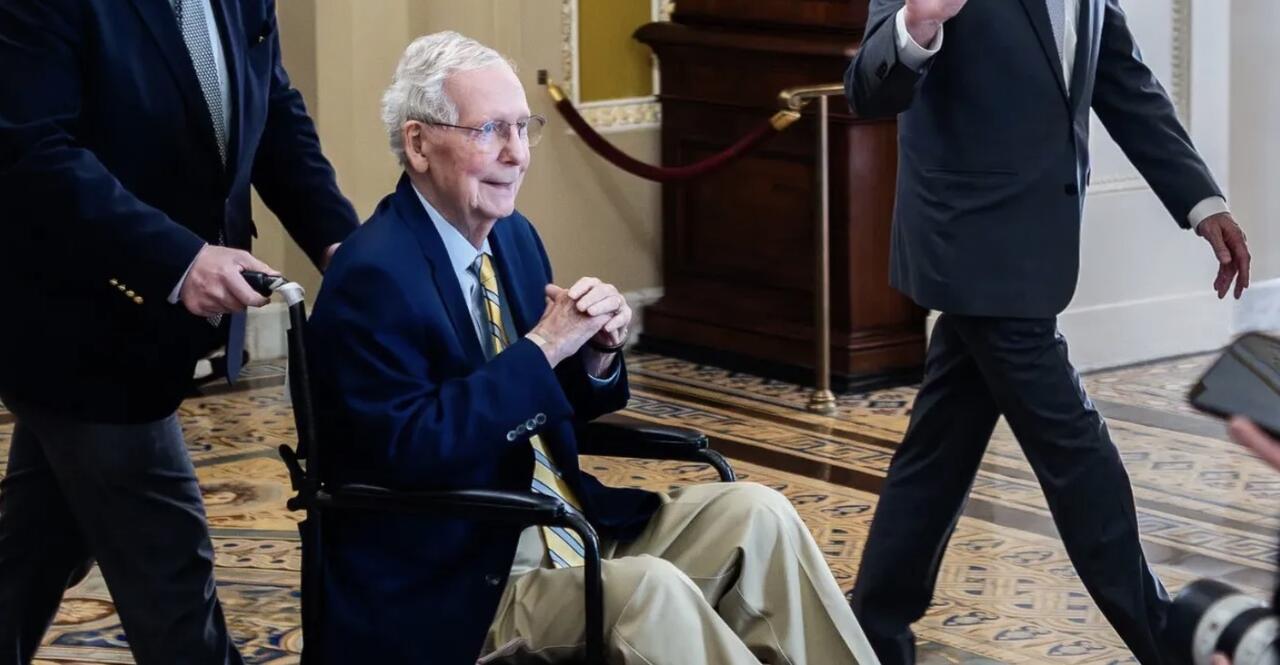
None of this ever had to end because the one thing that normally kills financial stupidity, the cost of capital, had been put into such a deep coma it made Mitch McConnell look like Jackie Chan in Rush Hour 2.
Jim Chanos, who shares my view that the AI buildout may have overshot the mark, has called this period a “golden age of fraud,” and I think there is an important connection between that description and the monetary environment that produced it.
Cheap money does not merely inflate asset prices. It extends the expiration date on bullshit.
A company burning $500 million a year does not necessarily have to confront reality if somebody will hand it another $2 billion. A commercial property does not need to be marked down if its owner can refinance it. A private equity sponsor does not have to admit an acquisition was terrible if it can amend, extend, refinance and wait. A venture fund does not need real price discovery if the next financing round can establish a higher valuation. A struggling public company can survive for an astonishing amount of time if equity investors remain willing to finance it.
The fundamental question has gradually changed from “Does this business work?” to “Can we keep financing it?” Those are completely different questions, and for an extraordinary period of time the answer to the second one was yes.
That environment also allowed narrative to become a substitute for analysis. Investors learned that understanding the story could be more profitable than understanding the financial statements. It’s what powers IPOs for unprofitable companies with grandiose visions at 100x sales. TAM became more important than margins. Growth became more important than returns on capital. Adjusted numbers became more important than GAAP numbers. Momentum became more important than valuation.
The market increasingly rewarded understanding what everybody else was going to believe next instead of determining what an asset was actually worth. Traditional fundamental investors either adapted or got carried out. You could identify deteriorating economics, ridiculous accounting, absurd multiples and terrible capital allocation, then watch the stock triple because management said “AI” on an earnings call.
And now we may be approaching the point where the environment starts adapting back. (Read: Bonds Just Killed The Easy Money Era For Good)
🔥 85% OFF FOREVER IF YOU SUBSCRIBE TODAY: I am again offering an 85% discount to anyone that wants to become a Fringe Finance annual subscriber today. It’s a discount you can keep and stays applied for as long as you wish to remain a subscriber: Get 85% off forever
If the post 2008 assumption of structurally cheap money is actually dying, then I think markets are about to rediscover something they have not had to consistently deal with in decades: truth.
The reason is simple. Higher rates restore consequences. When investors can earn meaningful returns in Treasury securities and other relatively safe assets, they no longer need to finance every revolutionary dog walking blockchain SaaS platform that comes along. Junk bonds have to offer genuinely attractive yields. Private credit has to compete against liquid alternatives. Venture investments have to offer enough potential return to compensate for years of illiquidity and enormous failure rates.
Suddenly, the hurdle rate exists again.
Companies burning cash discover that capital has a price. Companies dependent on refinancing discover that lenders have alternatives. Private equity firms discover that an acquisition financed with cheap debt looks considerably less brilliant when that debt has to be refinanced at twice the rate. Commercial real estate owners discover that capitalization rates matter. Governments discover that deficits carry interest expense. Investors discover that earnings expected fifteen years from now are worth substantially less when the discount rate is no longer zero.
Fraud becomes harder…because fraud loves liquidity. It needs it for sustenance. Liquidity buys time, and a questionable business can survive as long as somebody keeps funding it. Once capital becomes scarce, the runway shortens and the questions become considerably less philosophical. Where is the cash? Who owes whom? What is the collateral actually worth? Can you refinance this? Why does EBITDA never turn into free cash flow? Why are you issuing stock every quarter? Why does every supposedly temporary adjustment show up again next year?
Why, exactly, does this multi-billion dollar company make no f*cking money?
If this really is the beginning of a structurally different monetary environment, the psychological adjustment is going to be enormous because almost an entire generation of investors has never experienced markets operating this way. Imagine telling someone who started trading in 2020 that a company can beat revenue estimates and still fall because it loses enormous amounts of money. Imagine telling a venture capitalist that the value of a company might eventually be determined by the cash it distributes to its owners rather than the valuation assigned by the next venture capitalist. (Read: This Next Market Crash Will Break Our Fragile Brains)
For years, every serious skeptic eventually ran into the same argument: look at the stock price. It’s what has fooled people into thinking Tesla is worth paying 350x ttm earnings for. It is, to the best of what I can tell, the entire premise of most of the crypto world. The price itself became the evidence.
If the stock went up, management was brilliant. If the valuation expanded, the business model was validated. If investors continued supplying capital, concerns about profitability could be dismissed as antiquated thinking from people who simply “didn’t get it.”
But price and truth are not the same thing. They just looked similar while money was nearly free.
And we may currently be witnessing the final spectacular expression of that era. Speculative narratives remain enormous, apparent financial engineering is everywhere, private markets have exploded in size and investors have spent so long being rewarded for ignoring valuation that valuation itself can sometimes feel like an obsolete concept. Add a more hands off regulatory environment to the mix and you have about as permissive a backdrop for financial excess as I can remember.

Higher rates will not make markets perfectly rational either. Markets have been doing stupid things for hundreds of years and will presumably continue doing stupid things long after all of us are dead. But the environment in which stupidity operates matters enormously. Cheap capital subsidizes mistakes. Expensive capital exposes them.
If rates remain structurally higher, investors may rediscover a collection of supposedly obsolete concepts: balance sheets, interest coverage, free cash flow, return on invested capital, dilution, debt maturities, liquidation values, accounting quality and, God forbid, valuation.
Mark the Q-man’s words: there are tons of businesses, funds, loans and assets whose health depends on nobody forcing price discovery. There are probably losses buried throughout private markets that have not become losses yet simply because nobody has been required to transact.
And when those losses finally have to be recognized, it could be incredibly ugly. But that is not a bug in capitalism. That is the mechanism. Creative destruction requires destruction. Price discovery requires prices to occasionally discover something unpleasant. Capital allocation requires bad allocators to eventually lose access to capital. Markets cannot distinguish good businesses from bad businesses if everybody gets unlimited time and unlimited financing.
For twenty years, we increasingly tried to engineer those consequences out of the system. Chanos called what emerged the golden age of fraud. Einhorn eventually concluded that markets were fundamentally broken. Countless investors who continued trying to apply common sense watched narrative repeatedly bulldoze arithmetic.
Maybe markets were not permanently broken. Maybe money was simply too cheap for truth to matter.
If the cost of capital is finally normalizing for good, we are going to find out. After two decades of narratives, adjusted earnings, financial engineering, extend and pretend financing, imaginary valuations, unprofitable bullshit and seemingly endless supplies of money, we may finally get to see what is actually standing behind the curtain.
I suspect some of it is going to be horrifying. But after spending two decades drowning in excess, hubris, decadence and Dan Ives’ outfits, at least it will be real.
--
QTR’s Disclaimer: Please read my full legal disclaimer on my About page here.