Bessent Begs Fed For Mercy
If you wanted a textbook example of a central bank trapped between a geopolitical rock and a stagflationary hard place, welcome to September 2026. To wit: the ongoing standoff in the Strait of Hormuz is tearing through the global energy market, and the resulting inflation shock is vaporizing the bond market.
As we warned readers weeks ago when the initial blockades began, the diplomatic "negotiations" between Washington and Tehran are turning out to be nothing more than political theater. With President Trump officially rejecting Tehran's latest proposal, Brent crude has predictably violently rejected the downside, surging back toward the $107 level. Despite the usual algorithmic dip-buying on whispers that Iranian Foreign Minister Abbas Araghchi might speak to mediators in New York, the reality on the water is that millions of barrels remain bottlenecked in the world's most critical maritime chokepoint.
The resulting shockwaves are doing exactly what we said they would to the long end of the curve. The 10-year Treasury yield has blown out to a nearly two-decade high, sparking dramatic weakness below the surface of what at first seems like a 'far too calm' equity market. The Dollar wrecking ball is back in full swing - tightening financial conditions, and gold is being temporarily liquidated as traders scramble for liquidity.
Enter Bessent
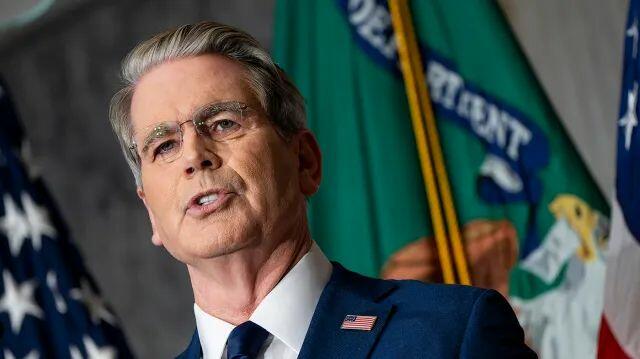
Now, Bessent is calling for The Fed to "keep an open mind" on the US inflation outlook - and that productivity gains from AI and deregulation will keep it in check, according to Bloomberg.
In short, the administration is quietly terrified that The Fed is going to look at the oil-driven inflation prints, panic, and hike rates straight into a structurally vulnerable economy. Bessent is effectively pleading with the Fed to look past the energy spike and recognize that tightening monetary policy won't clear Iranian gunboats out of the Strait of Hormuz.
The market is pricing a 70% chance that The Fed will hike in October, ahead of the Midterms.
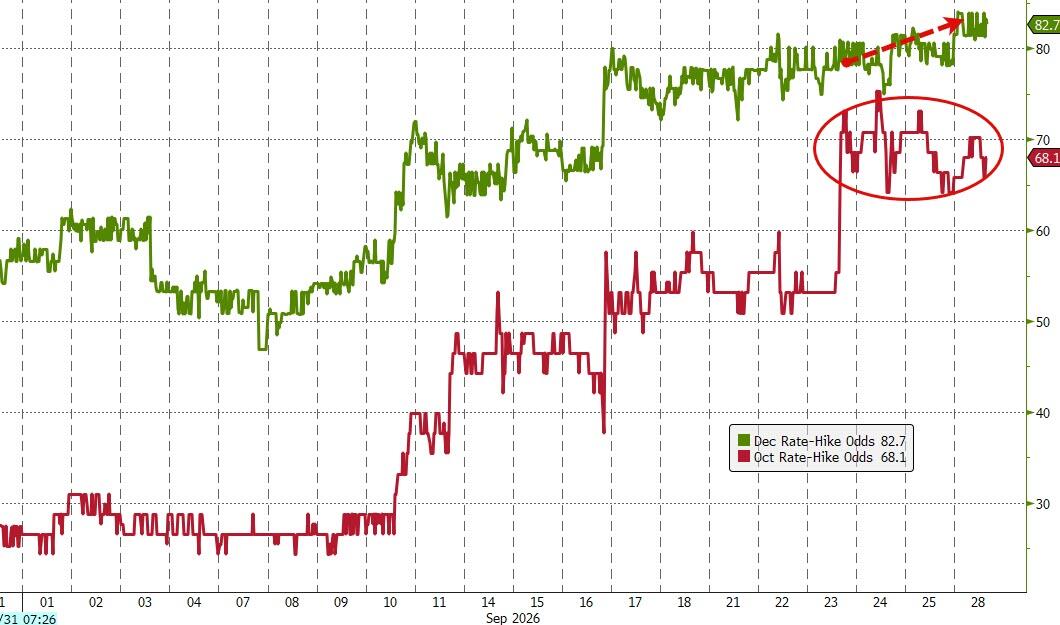
But the Fed may not have the luxury of an "open mind" given the market's pricing (The Fed prefers not to surprise the market) and the incoming data.
As we noted in our PCE preview last week, the upcoming inflation-adjusted consumer spending numbers for August are expected to surge by the most this year. While government statisticians are desperately trying to massage the Fed's preferred underlying inflation gauge - literally revamping the methodology to shave off three-tenths of a percentage point - the unvarnished monthly data is going to be a disaster for any dovish narrative.
And then comes Friday's Non-Farm Payrolls.
Wall Street's perpetually optimistic consensus is expecting a "Goldilocks" print of 90,000 jobs and an unchanged 4.1% unemployment rate. As always, we fully expect Biden-era BLS holdovers to rely on heavily massaged seasonal adjustments and the infamous Birth-Death model to paint a picture of a "resilient" labor market. Wall Street cheerleaders, like UBS's Ulrike Hoffmann-Burchardi, are already pre-spinning the narrative, claiming the US economy can "absorb the impact of modestly tighter monetary policy."
We've heard this story before. The market is entirely hostage to the bond vigilantes, and with earnings season still weeks away, equities have nowhere to hide from the soaring cost of capital (with hyperscaler issuance reflexively biting its own tail).
Bessent can urge the Fed to keep an "open mind" all he wants, but with oil knocking on $110 and the 10-year yield breaking multi-decade highs, the math is doing the talking.