Tax The Rich: The Promise That Leaves The Middle Class Paying The Bill
Authored by Christian Vezilj via American Thinker,
For more than sixty years, I have listened to politicians repeat the same familiar promise: tax the rich. Every election cycle, the message returns, wrapped in new slogans and delivered with renewed enthusiasm. Millionaires and billionaires, we are told, have more than their fair share. If only government would tax them more aggressively, America could afford an endless assortment of new programs, benefits, and government services. It is a politically attractive argument. After all, who wouldn't prefer someone else to pay the bill?
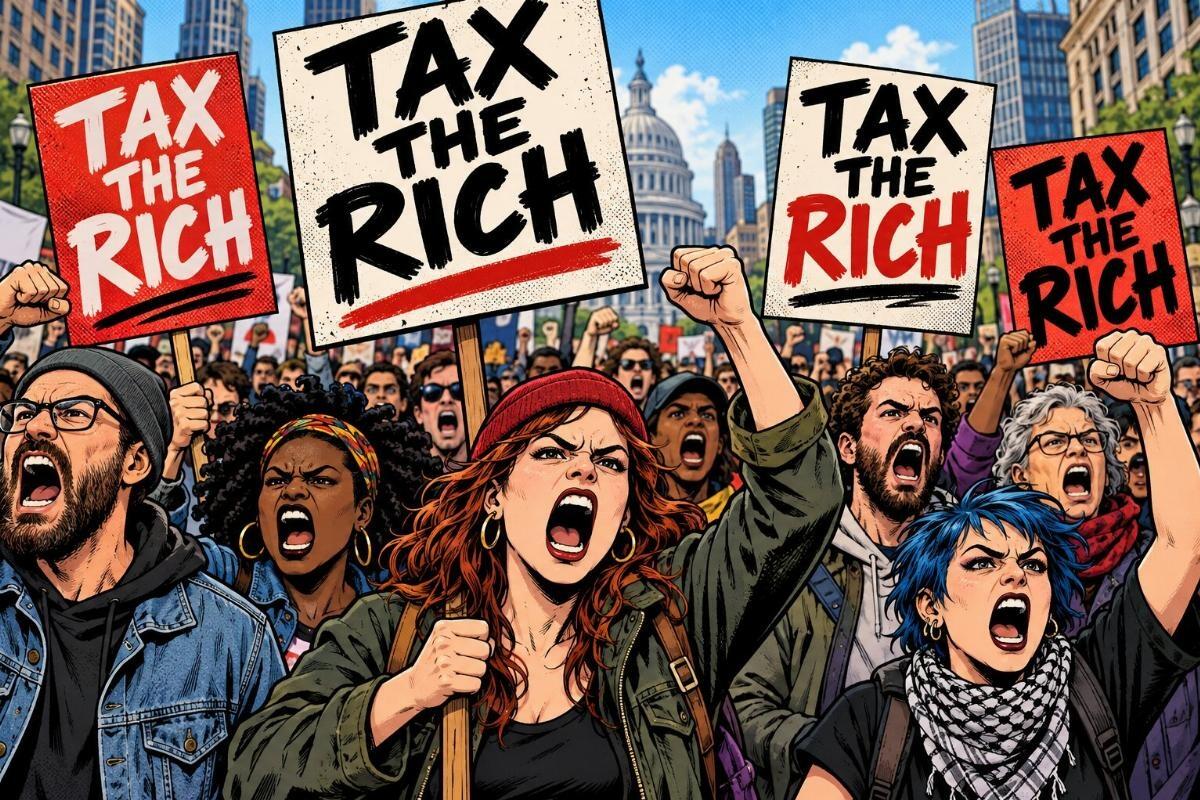
But this promise has a fundamental problem, one that rarely gets the attention it deserves. The wealthy represent a relatively small population, while the middle class represents an enormous tax base. And when politicians promise expansive government programs funded exclusively by taxing the rich, basic arithmetic deserves more attention than political rhetoric.
Consider the numbers. America has approximately 1,000 billionaires and more than 23 million millionaires, measured by net worth. Yet millions of these millionaires are not extraordinarily wealthy individuals living extravagant lifestyles. They are homeowners, retirees, and working professionals who have spent decades accumulating savings, retirement accounts, and home equity.
More importantly, wealth and taxable income are very different. A billionaire may own billions in appreciating stock while reporting comparatively little taxable income. A middle-class worker earning $100,000, by contrast, has income reported directly to the IRS, with taxes withheld from every paycheck. And herein lies the distinction politicians conveniently overlook.
The wealthy have options.
They employ accountants, tax attorneys, financial advisers, and estate planners who understand every provision of the tax code. They can defer capital gains, restructure investments, use trusts, relocate businesses, and sometimes move their residences to more favorable tax jurisdictions. These strategies are perfectly legal. The tax code itself provides the opportunities.
The average working American enjoys no comparable flexibility. His employer reports his income, deducts his taxes, and sends the money to Washington before he ever sees it.
When government raises taxes on high-income individuals, some will pay more. Others will adjust their financial affairs to reduce their exposure. Some may relocate, while others will change investment decisions or defer realizing income. The degree varies, but the incentive is undeniable.
Meanwhile, the middle-class taxpayer remains exactly where he has always been: working, earning, and paying.
This brings us to the political appeal of today's democratic socialist movement, including candidates associated with the Democratic Socialists of America. Their proposals frequently emphasize expanded government services, public benefits, and programs presented as rights rather than expenses. The familiar financing explanation is that corporations and the wealthy will pay more.
But how much more? And for how long?
Wealthy Americans certainly have greater financial resources. And progressive taxation already requires high-income earners to contribute a disproportionate share of federal individual income taxes. But that does not mean their resources are unlimited, nor that every proposed government program can be financed simply by raising their tax rates.
Europe also offers a lesson. Countries operating expansive social welfare systems frequently rely on broad-based consumption taxes, payroll contributions, and income taxes that reach well into the middle class. Their programs are not financed exclusively by billionaires. Ordinary citizens contribute substantially because universal government benefits require an enormous and dependable stream of revenue. Why should Americans assume the mathematics would somehow work differently here?
I believe this is the uncomfortable reality behind the decades-old promise to tax the rich. The political message identifies a small, wealthy minority as the source of funding, while the largest and most dependable potential revenue base consists of ordinary working Americans.
I am not suggesting that every politician secretly intends to raise middle-class taxes. But I am suggesting that voters should demand an honest explanation of how permanently expanding government programs will be financed when projected taxes on the wealthy prove insufficient.
Government cannot escape arithmetic. Spending must ultimately be supported through taxation, borrowing, or reductions elsewhere. Borrowing merely postpones the financial obligation while adding interest costs.
And the more government promises, the more important that arithmetic becomes.
I have heard the same political sales pitch. Tax the rich, expand government, and let someone else pay. Yet the middle class remains the broadest and most accessible population from which government can collect additional revenue.
Perhaps the real question is this: When the wealthy cannot pay for everything politicians promise, who will be left holding the bill? I suspect millions of middle-class Americans and our children.